
Your septic system works quietly underground, treating wastewater from your home's toilets, showers, sinks, and appliances. But when your septic drain field stops working properly, the results can be messy, expensive, and potentially hazardous.
For homeowners in Dacula, Georgia, recognizing the early warning signs of septic drain field problems can help prevent more extensive property damage.
At Green Septic Clean, we provide septic system maintenance, inspections, drain field services, and repairs throughout North Georgia.
Here are eight warning signs that your septic drain field may need professional attention.
What Is a Septic Drain Field?
A septic drain field, sometimes called a leach field, is an underground area where wastewater from your septic tank is dispersed into the soil for further treatment.
Inside the septic tank, solids settle while fats and oils rise to the surface. The liquid wastewater, called effluent, moves into the drain field.
The surrounding soil helps filter and treat the wastewater.
When the drain field becomes overloaded, clogged, or damaged, wastewater may no longer drain properly.
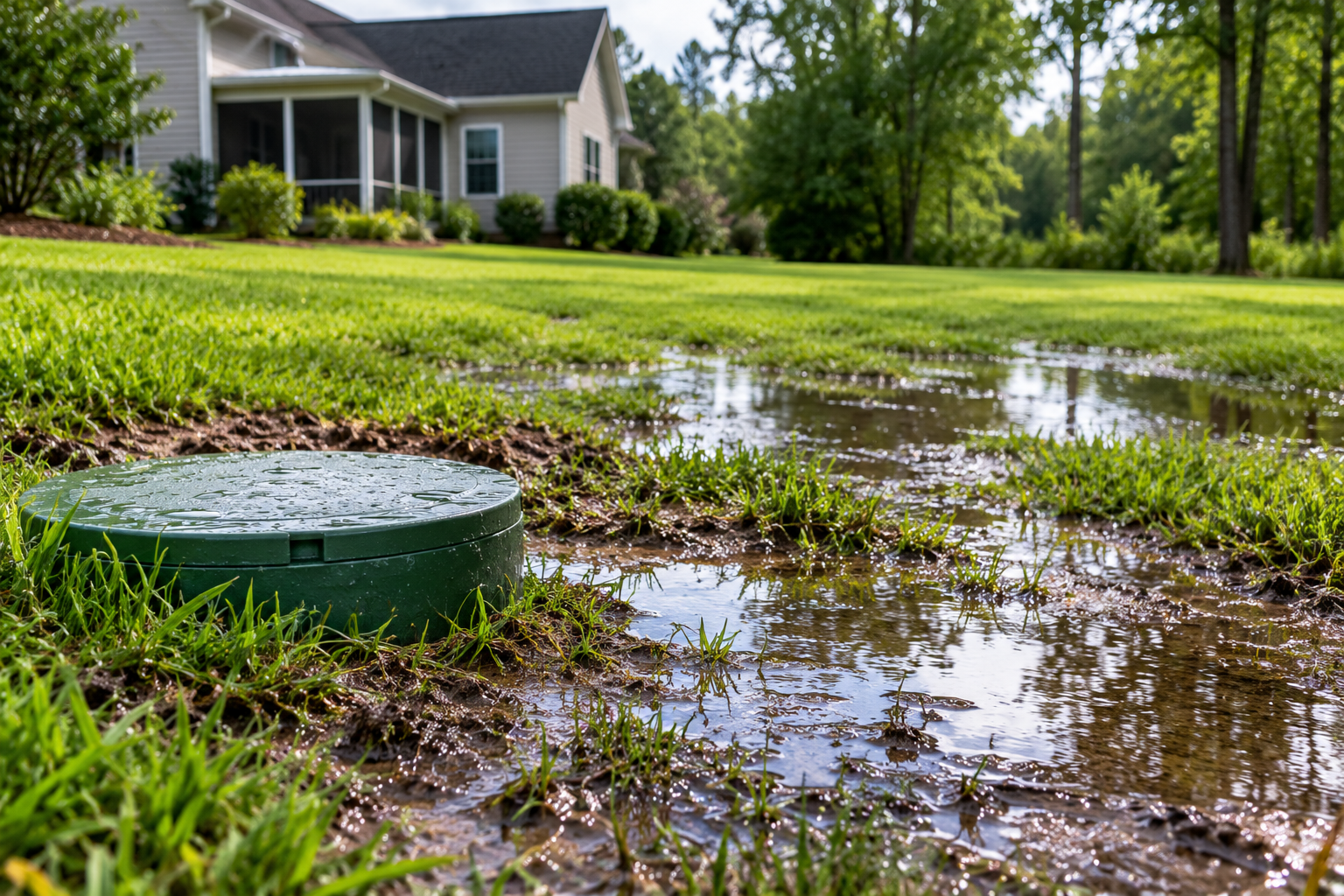
1. Your Yard Has Unusually Wet or Soggy Areas
One of the most noticeable warning signs of a drain field problem is consistently wet ground.
You may notice:
- Soggy grass when it hasn't rained
- Standing water near the septic area
- Soft or muddy soil
- Persistent moisture around the drain field
These conditions can indicate wastewater isn't dispersing properly.
However, poor yard drainage, irrigation leaks, and heavy rainfall can create similar symptoms. A septic inspection can help determine the cause.
2. You Notice Sewage Odors Outside
A properly functioning septic system generally shouldn't produce persistent sewage odors around your yard.
If you notice unpleasant smells near the tank or drain field, wastewater may be surfacing or escaping where it shouldn't.
Don't ignore recurring sewage odors, particularly when accompanied by wet ground or slow drains.
3. Multiple Drains Inside Your Home Are Slow
A single slow bathroom sink may have a localized clog.
But when multiple drains become sluggish, the problem could involve the main sewer line, septic tank, or drain field.
Watch for slow drainage in:
- Bathtubs
- Showers
- Kitchen sinks
- Toilets
- Laundry drains
If several fixtures are affected, professional septic system evaluation is recommended.
4. Sewage Backs Up Into Your Home
Sewage backing up into a bathtub, shower, or floor drain is a serious warning sign.
Possible causes include:
- A blocked sewer line
- A full or obstructed septic tank
- A malfunctioning septic pump
- Drain field problems
A backup doesn't automatically mean the drain field has failed.
However, wastewater entering your home requires prompt attention.
Stop using water fixtures and contact a septic professional — our 24/7 emergency septic service can help. Avoid contact with sewage because it can contain harmful microorganisms.
5. Grass Over Your Drain Field Looks Unusually Green
An unusually lush patch of grass above the drain field can sometimes indicate excess moisture or nutrients reaching the soil.
If one section of your lawn is significantly greener than surrounding areas, especially during dry weather, it may be worth investigating.
Healthy grass alone doesn't prove a septic problem.
Look for additional symptoms such as odors, standing water, or slow drains.
6. Your Septic Tank Needs Frequent Pumping
Routine septic pumping is an important part of system maintenance.
However, if you're repeatedly experiencing backups or needing emergency pumping sooner than expected, the underlying problem may not be the tank's normal accumulation of solids.
A drain field restriction, excessive household water use, or another system defect could be contributing.
Pumping a septic tank may temporarily relieve symptoms, but it won't repair a failed drain field.
7. Your Septic System Struggles After Heavy Rain
Heavy rainfall can saturate the soil around a septic drain field.
When the surrounding soil is already saturated, wastewater may have difficulty dispersing.
Some homeowners notice slow drains or backups during periods of prolonged rain.
If this happens repeatedly, have your septic system evaluated to determine whether drainage conditions or system defects are responsible.
8. Your Drain Field Has Been Damaged by Vehicles or Construction
Septic drain fields aren't designed to support heavy vehicles, construction equipment, or structures.
Driving or parking over the drain field can compact soil and damage underground components.
Other potential problems include:
- Building over the drain field
- Excavating without locating septic components
- Allowing tree roots to interfere with piping
- Redirecting stormwater toward the septic area
Protecting the drain field from unnecessary disturbance can help extend its service life.
What Causes Septic Drain Field Failure?
Several conditions can contribute to drain field problems.
Excessive Water Usage
Large amounts of wastewater entering the system over a short period can overload its treatment capacity.
Poor Septic Tank Maintenance
When solids accumulate excessively, they may escape the tank and contribute to downstream restrictions.
Soil Saturation
Heavy rainfall, groundwater conditions, or poor drainage can interfere with wastewater dispersal.
Physical Damage
Heavy vehicles, excavation, and soil compaction can damage pipes or reduce the soil's ability to absorb wastewater.
Aging or Improperly Sized Systems
Older systems and systems that no longer match household wastewater demands may struggle to operate effectively.
Can a Septic Drain Field Be Repaired?
Sometimes.
The appropriate solution depends on the cause and extent of the problem.
A septic professional may recommend:
- Septic tank pumping and inspection
- Repairing damaged distribution piping
- Correcting certain drainage problems
- Evaluating the distribution box
- Drain field restoration where appropriate
- Partial or complete drain field replacement
Not every drain field problem requires complete replacement.
A professional assessment helps determine which options are suitable for the property.
How Can Dacula Homeowners Protect Their Drain Fields?
Good septic habits can reduce unnecessary stress on the system.
- Schedule septic inspections and pumping as recommended.
- Repair leaking faucets and running toilets.
- Spread laundry loads throughout the week.
- Keep vehicles and heavy equipment off the drain field.
- Avoid planting trees directly over septic components.
- Direct roof and surface runoff away from the drain field where appropriate.
- Never flush wipes, grease, or other inappropriate materials into the system.
Frequently Asked Questions
How do I know if my septic drain field is failing?
Warning signs include soggy ground, sewage odors, slow drains, wastewater backups, and recurring drainage problems. A professional inspection is needed to confirm the cause.
Can heavy rain cause septic drain field problems?
Yes. Saturated soil can temporarily reduce wastewater absorption and may reveal underlying system problems.
Will pumping my septic tank fix a failed drain field?
Pumping removes accumulated tank contents but doesn't repair a failed drain field. Further inspection may be necessary.
Can I drive over my septic drain field?
You should avoid driving or parking vehicles over drain fields because the weight can compact soil and damage underground components.
How much does septic drain field repair cost in Dacula, GA?
Costs depend on the system design, soil conditions, accessibility, and extent of repairs. An on-site evaluation is the best way to obtain an accurate estimate — request a free estimate or learn more about drain field repair in Dacula.
Septic Drain Field Repair in Dacula, GA — Contact Green Septic Clean
A failing drain field can threaten your home's plumbing, yard, and surrounding environment.
If you're noticing wet patches, sewage odors, slow drains, or recurring backups, don't wait for the problem to get worse.
Green Septic Clean provides septic system inspections, maintenance, drain field services, and repairs for homeowners throughout North Georgia.
We're licensed, bonded, and insured, and offer free estimates and 24/7 emergency septic service.
Call Green Septic Clean at 770-407-7975 for septic drain field assistance in Dacula, GA.
Drain Your Tank, Not Your Wallet.