
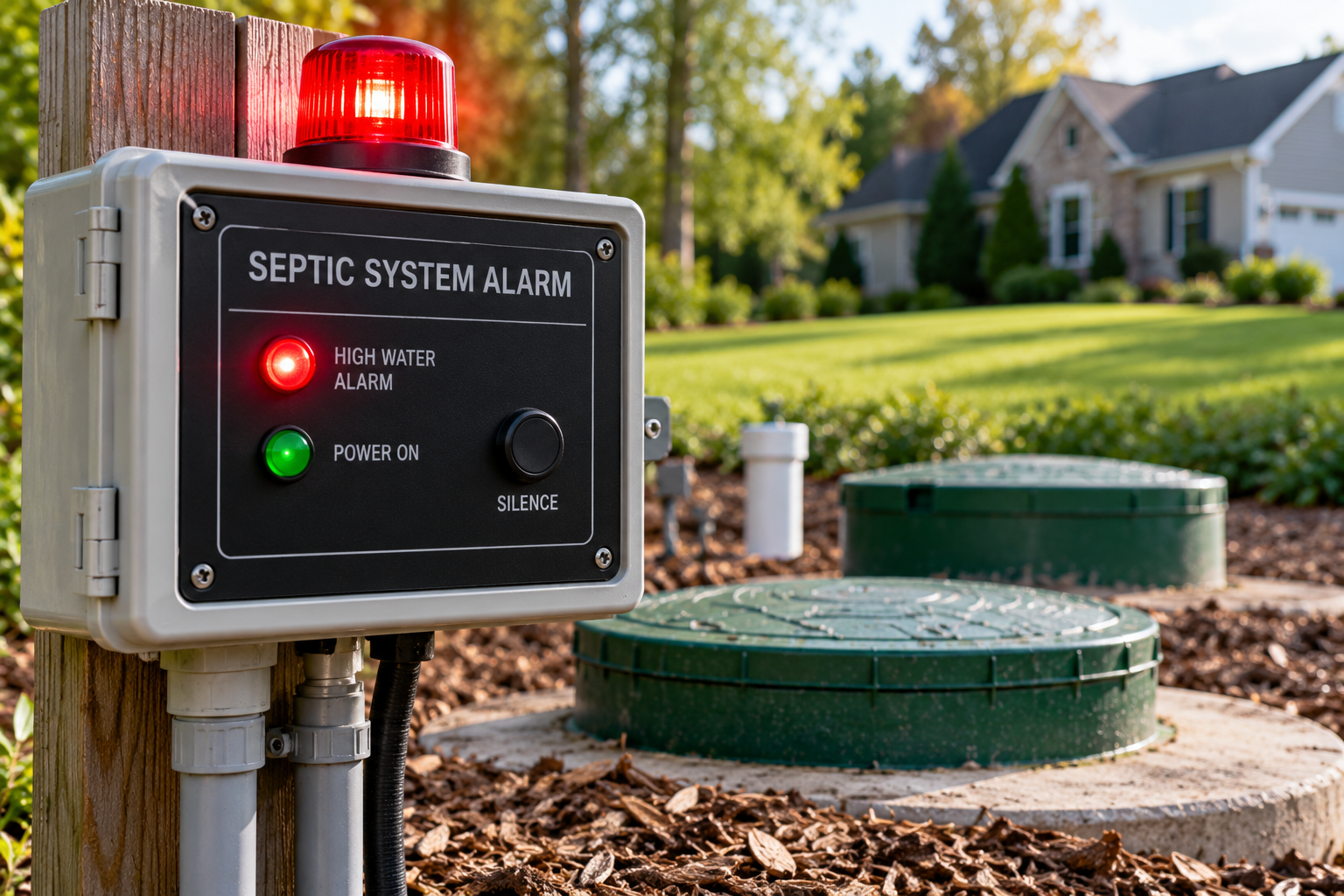
You're relaxing at home when suddenly you hear a loud alarm coming from your septic system.
Maybe a red warning light is flashing on a control panel. Maybe an alarm near your septic tank has started buzzing.
If your home in Athens, Georgia, uses a septic system with a pump and alarm, that warning deserves attention.
A septic alarm often indicates that wastewater has reached an unusually high level in a pump chamber or that another monitored system condition needs attention.
At Green Septic Clean, we help homeowners diagnose septic system problems and determine when professional repairs are necessary.
Here are seven possible reasons your septic alarm may be going off.
What Does a Septic Alarm Mean?
Some septic systems use pumps to move wastewater between tanks, treatment components, or drain fields.
These systems may have an alarm that alerts homeowners when the liquid level rises above a designated point.
Depending on the system, alarms can also indicate equipment faults or other monitored conditions.
A septic alarm doesn't always mean sewage is about to back up into your home, but it should never be ignored.
1. Your Septic Pump Has Stopped Working
A failed pump is one possible cause of a high-water alarm.
If the pump isn't moving wastewater out of its chamber, the liquid level may continue rising until the alarm activates.
Pump problems may involve:
- Motor failure
- Mechanical wear
- Obstructions
- Damaged electrical components
- Pump control problems
A septic technician can determine whether the pump needs repair or replacement. Learn more about our lift station and pump service.
2. Your Home Has Experienced a Power Outage
Many septic pumps require electricity.
During a power outage, the pump may stop operating while household wastewater continues entering the system.
When electricity returns, the alarm may activate because the water level is higher than normal.
Avoid unnecessary water use until the system has recovered and the alarm condition is resolved.
If the warning continues, contact a septic professional.
3. The Float Switch Is Malfunctioning
Many pumped septic systems use float switches to monitor wastewater levels and control pump operation.
A float may become stuck, damaged, or improperly positioned.
Possible symptoms include:
- A pump that doesn't start
- A pump that runs continuously
- An alarm that activates unexpectedly
- Inconsistent pump operation
Float switch diagnosis and replacement should be performed by a qualified technician.
4. Heavy Rain Has Affected Your Septic System
Heavy rainfall can contribute to septic problems, especially when surrounding soil becomes saturated.
Groundwater or surface water may also enter a compromised septic system through damaged components.
This additional water can increase demand on the pump or interfere with normal wastewater dispersal.
If your septic alarm frequently activates after storms, the system should be inspected.
5. Your Household Is Using Too Much Water at Once
A large amount of wastewater entering the septic system over a short period can temporarily raise liquid levels.
Activities that increase wastewater flow include:
- Running several laundry loads
- Taking multiple showers
- Operating a dishwasher
- Filling and draining a large bathtub
- Having additional overnight guests
A properly functioning system should be designed for expected household use, but excessive or concentrated water demand can contribute to problems.
6. A Discharge Line Is Blocked or Damaged
A septic pump may be running but unable to move wastewater effectively.
Possible causes include:
- Blocked piping
- Damaged discharge lines (see sewer line service)
- Valve problems
- Obstructions
- Downstream restrictions
A technician can inspect the pumping and discharge system to determine why wastewater isn't moving properly.
7. The Alarm or Control Panel Has an Electrical Problem
Sometimes the warning is related to the alarm equipment itself.
Damaged wiring, faulty sensors, or control panel problems may cause unexpected alarms.
However, homeowners shouldn't assume an alarm is false simply because the plumbing fixtures still appear to work.
The warning should be investigated to determine whether the issue involves the alarm or the septic system.
What Should You Do When Your Septic Alarm Goes Off?
If your septic alarm activates, take these steps.
Step 1: Reduce Water Usage
Avoid unnecessary showers, laundry, dishwasher cycles, and other activities that send wastewater into the septic system.
This can help reduce additional loading while the problem is being evaluated.
Step 2: Look for Obvious Warning Signs
Check for symptoms such as:
- Slow drains
- Gurgling toilets
- Sewage odors
- Wastewater backups
- Wet areas near septic components
Don't open septic tanks or access chambers yourself.
Step 3: Check for a Recent Power Outage
If your home recently lost electricity, that may explain why a pump temporarily stopped operating.
Only check ordinary household electrical controls if they are safely accessible and dry.
Never open electrical control panels, enter flooded areas, or handle septic electrical equipment yourself.
Step 4: Don't Simply Ignore the Alarm
Some systems have a silence button that temporarily mutes the audible warning.
Silencing the alarm doesn't correct the underlying condition.
Follow the manufacturer's instructions and arrange service if the warning persists.
Step 5: Contact a Septic Professional
If the alarm continues, wastewater is backing up, or you suspect pump failure, contact a qualified septic technician. Our 24/7 emergency septic service covers Athens and nearby communities.
Can You Still Use Water When the Septic Alarm Is Going Off?
It's best to minimize water usage until you know why the alarm activated.
If the pump chamber is already holding too much wastewater, additional water can increase the risk of a backup.
Avoid doing laundry, taking long showers, or running unnecessary fixtures until the problem has been assessed.
How Do Professionals Diagnose Septic Alarm Problems?
Depending on the system, a septic technician may evaluate:
- Pump operation
- Liquid levels
- Float switches
- Alarm sensors
- Control equipment
- Discharge piping
- Signs of restrictions or damage
The appropriate repair depends on the actual cause.
Sometimes a component can be repaired or adjusted. Other situations may require pump replacement or additional septic system work.
How Can You Reduce the Risk of Future Septic Alarm Problems?
Preventive maintenance can help keep pumped septic systems operating properly.
Consider these steps:
- Schedule recommended septic inspections.
- Pump your septic tank at appropriate intervals.
- Avoid flushing wipes and other non-flushable products.
- Spread laundry loads throughout the week.
- Repair running toilets and leaking fixtures.
- Protect septic components from vehicle traffic and physical damage.
- Address recurring alarms promptly.
Frequently Asked Questions
Is a septic alarm an emergency?
It can be. An alarm may indicate a high wastewater level or pump malfunction. If sewage is backing up or the alarm persists, prompt professional assistance is recommended.
Why is my septic alarm going off after heavy rain?
Saturated soil, excess water entering the system, or downstream drainage problems may contribute to elevated wastewater levels.
Can I reset my septic alarm myself?
Follow your system manufacturer's instructions. Don't repeatedly reset or silence an alarm without addressing the cause.
Does every septic tank have an alarm?
No. Many gravity-fed septic systems don't require a pump or high-water alarm. Alarms are more common on systems with pumps or additional treatment components.
Can a septic alarm indicate a bad pump?
Yes. Pump failure is one possible cause, but float switches, electrical issues, blocked lines, and other problems can produce similar warnings.
Septic Pump and Alarm Problems in Athens, GA? Call Green Septic Clean
A septic alarm is your system's way of telling you something may need attention.
Ignoring it could allow a manageable problem to develop into a wastewater backup or more extensive septic repair.
Green Septic Clean provides septic system inspections, pumping, maintenance, and repairs throughout Athens and surrounding North Georgia communities. See our septic system repair in Athens page or request a free estimate.
Our team offers free estimates and 24/7 emergency septic service.
Call Green Septic Clean at 770-407-7975 if your septic alarm is going off in Athens, GA.
Drain Your Tank, Not Your Wallet.